
DEI Didn’t Just Disappear
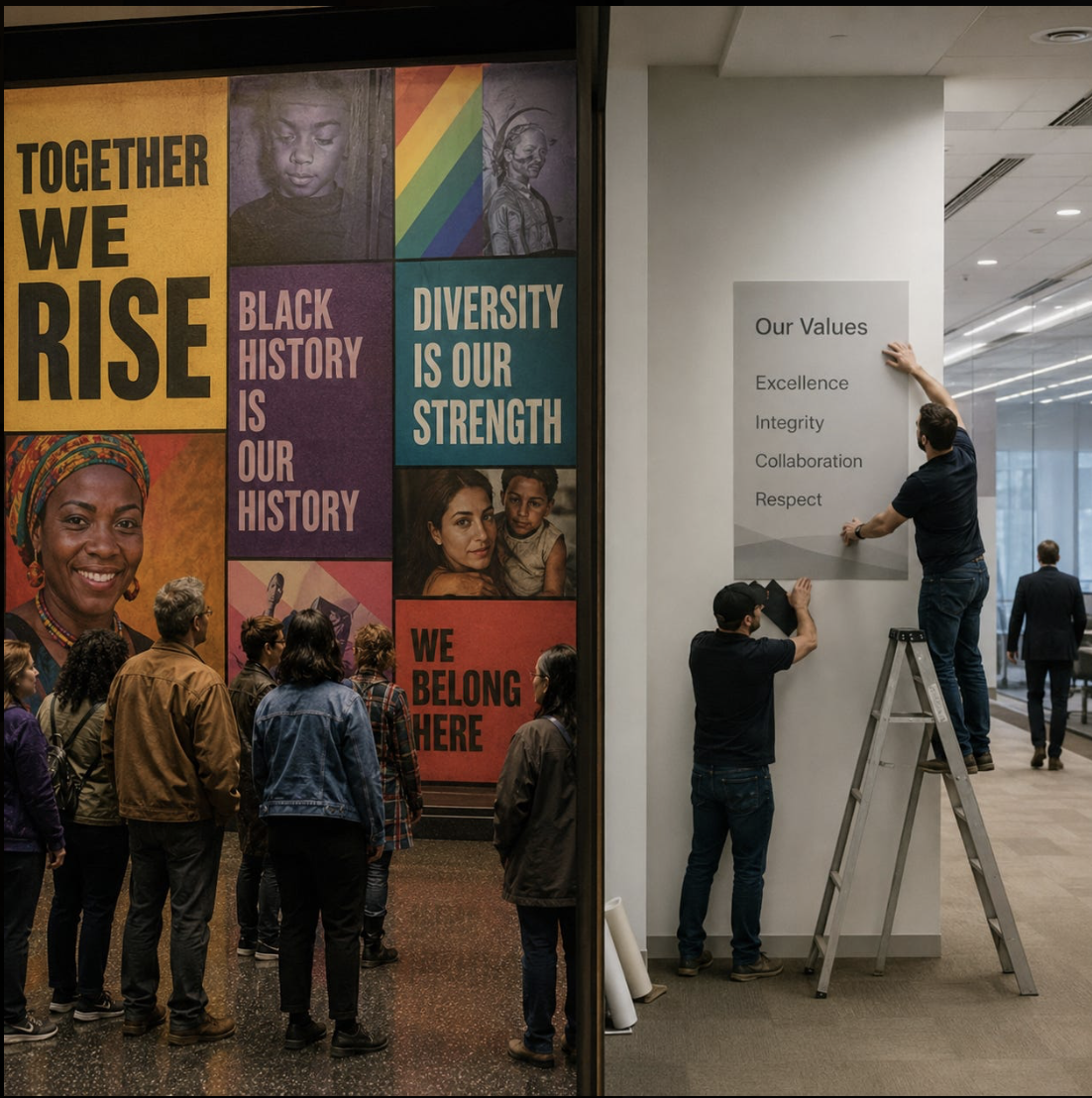
DEI Didn’t Just Disappear—Corporate America Read the Room and Changed the Language
Back in 2020, companies could not move fast enough to show that they supported diversity, equity, and inclusion. Everybody had a statement. Everybody had a new initiative. Companies created DEI departments, made public commitments and promised to address discrimination inside their workplaces.
But somewhere between 2024 and 2026, the energy changed.
Now, many of those same companies are quietly backing away from the language they once embraced. DEI departments are being downsized or eliminated. Public commitments are being rewritten. Words like equity and social justice are being replaced with safer terms like belonging, unity, excellence, merit and business performance.
Corporate America did not suddenly solve discrimination. It simply realized that speaking openly about it had become politically and financially risky.
Companies Saw the Backlash and Took Notes
The Bud Light controversy became a major turning point.
Whether people agreed with the backlash or not, companies watched what happened when a brand became the center of a political and cultural fight. The public reaction was loud, organized and expensive.
That moment sent a clear message through corporate boardrooms: taking a public stand on social issues could cost more than remaining silent.
Since then, companies like Tractor Supply and John Deere have pulled back from DEI programs and other social initiatives after facing pressure from parts of their customer base. Pride campaigns have been reduced. Corporate statements have become more cautious. Brands that once wanted to be seen as socially responsible now want to be seen as politically neutral.
But corporate neutrality is not really neutral.
Choosing silence during a cultural conflict is still a choice. It usually means that companies are following the side of the public reaction they believe has the most power to affect their profits.
The Public Mood Has Changed
This retreat is about more than corporate policy. It reflects a deeper shift in the country.
DEI became a symbol in America’s larger culture war. For some people, it represented fairness and an attempt to correct longstanding discrimination. For others, it came to represent quotas, political pressure and unfair advantages based on race or identity.
Once the term itself became controversial, companies started treating it like damaged merchandise.
Instead of defending their programs or explaining why they were created, many organizations simply changed the name. The goal became avoiding public criticism from either side.
That is how we reached this new era of corporate language: say enough to appear inclusive, but not enough to become a target.
The Legal Pressure Made Companies Even More Cautious
The Supreme Court’s 2023 affirmative-action ruling also changed the climate.
Even though the ruling focused on college admissions, it encouraged legal challenges against race-conscious programs in other areas. Private companies, nonprofit organizations and grant-making institutions began reviewing programs that specifically supported certain racial or identity groups.
The Fearless Fund case, involving grants for Black women entrepreneurs, became one of the clearest examples of this new legal pressure.
The message to organizations was simple: programs created to address historical inequality could now become legal liabilities.
That fear has spread beyond the corporate world. Arts organizations, universities, foundations and government agencies have also adjusted how they describe diversity-related work. Programs once centered on racial equity are increasingly being framed around shared history, unity, general opportunity or economic need.
The work may still exist, but the language is being cleaned up to survive the current political environment.
Merit Is Becoming the New Corporate Shield
As DEI loses favor, companies are embracing a new framework built around merit, excellence and intelligence—sometimes referred to as MEI.
On the surface, that sounds reasonable. Most people believe qualified individuals should be hired and promoted based on their ability.
But the word merit can also be used to avoid harder conversations.
Who defines merit? Who had access to the education, connections and opportunities needed to build an impressive résumé? Are hiring decisions truly objective, or do familiar biases still shape who is viewed as talented, professional or leadership material?
Calling a system merit-based does not automatically make it fair.
There is also a cultural message behind the rise of MEI. Companies increasingly want workers to view the workplace like a professional sports team: performance comes first, the strongest players earn their positions and the company’s only responsibility is to win.
That approach may sound efficient, but businesses are not separate from society. The workplace is one of the main places where people experience inequality, opportunity, advancement and exclusion.
You cannot remove culture from the workplace just by declaring the company identity-blind.
DEI Is Being Rebranded, Not Completely Removed
Some companies are not eliminating inclusion efforts. They are simply changing the packaging.
Terms like inclusive excellence, unity and belonging, workplace culture and skills-first hiring are becoming more common. These phrases keep parts of the original mission while removing words that attract political backlash.
This may help some programs survive. Skills-first hiring, for example, can open doors for talented people who do not have traditional degrees or professional connections. A focus on belonging can improve workplace culture without relying on quotas.
Still, the change in language matters.
When companies remove words like race, discrimination and equity from the conversation, they also risk removing the ability to clearly identify the problem.
You cannot address racial discrimination while being afraid to mention race. You cannot correct unequal outcomes while refusing to discuss why those outcomes exist.
So, Is DEI Dead?
The DEI brand may be dying in mainstream corporate America, but the issues that created DEI have not gone anywhere.
Hiring bias still exists. Leadership opportunities are still uneven. Workplace culture still affects who feels valued, who gets promoted and who is pushed out. Companies still benefit from having people with different backgrounds, experiences and perspectives at the table.
What has changed is the level of courage companies are willing to show publicly.
Many businesses supported DEI when it was popular, safe and good for their image. Now that the public reaction has become more divided, those commitments are being tested.
Some companies are standing by their values. Others are quietly deleting the evidence.
What we are witnessing is not the end of diversity. It is the corporate rebranding of diversity for a more hostile political moment.
The word merit will likely become the shield companies use to defend their decisions. Unity will replace equity. Belonging will replace diversity. Neutrality will replace public advocacy.
But underneath all the new language, the same question remains:
Will companies create real opportunities for people who have historically been excluded, or will they simply find more comfortable words to explain why nothing has changed?
