
The 14th Amendment Was a Promise. Georgia Is Testing It.
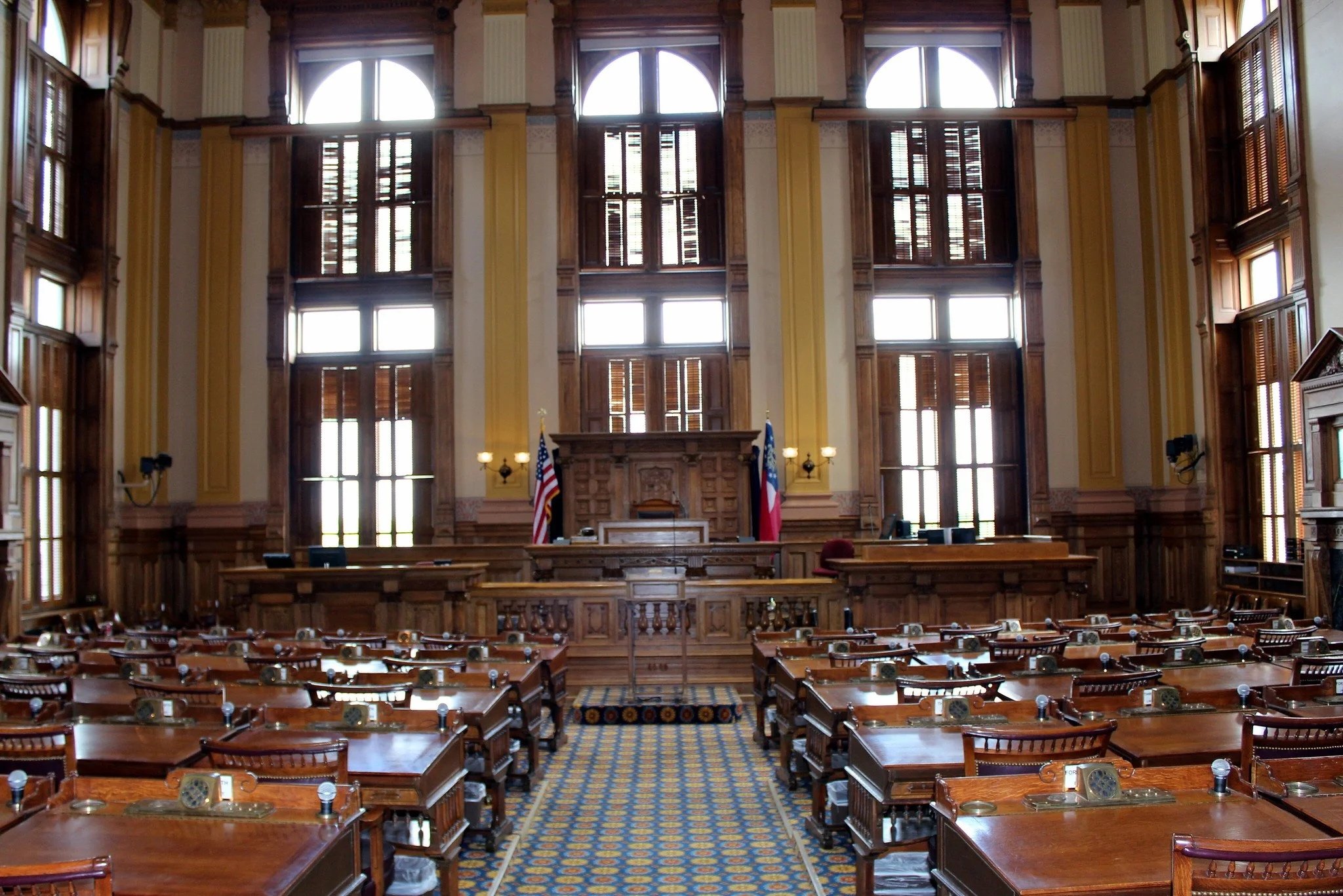
While some are focused on the governor’s race and local runoff elections, voters are also facing a powerful issue that will shape representation in Georgia for years to come: redistricting. The Supreme Court’s recent decisions have narrowed certain protections under the Voting Rights Act, and combined with renewed efforts to redraw political maps, this moment calls for urgent attention, especially here in Georgia, as a special legislative session beginning June 17 is expected to address redistricting under Governor Brian Kemp.
So why should Black communities be concerned? Because redistricting is not just about maps, it is about power. It determines who is represented, which communities are split apart, and whose voices are strengthened or weakened in the political process. Across the South, from Tennessee to Alabama, we have already seen how redistricting battles can fracture growing voting coalitions and reshape political representation. In some cases, district lines have been redrawn in ways critics argue weaken Black political influence and disrupt unified community voting strength. These changes can happen quickly, but their impact can last for years.
For example, during the 2022 redistricting process, a few of Athens elected officials were effectively drawn out of their districts and could no longer run again because of how political boundaries were redrawn. Whether people agreed with those officials politically is not the point. In a healthy democracy, voters should decide who remains in office, not strategic manipulation of district lines.
That moment should have been a warning about how easily representation can shift. Because when communities lose representation, they often lose more than political seats. They lose influence over housing decisions, funding, transportation, policing priorities, and economic development. This is why redistricting is not a distant policy issue, it is a community issue with real consequences.
During the Civil Rights Movement, many people sacrificed their lives for the rights and freedoms we benefit from today. The Movement was rooted in courage, sacrifice, strategy, and the fight to make America live up to its promise of equality. It challenged segregation, racial violence, voter suppression, discrimination, unequal education, housing injustice, and systems designed to keep Black communities politically and economically powerless. Activists organized boycotts, sit-ins, voter registration drives, legal challenges, and mass protests, often while facing arrest, threats, and violence.
Despite how celebrated the movement is today, many of its leaders were heavily criticized in their time. Dr. Martin Luther King Jr. was often labeled divisive and radical simply for demanding justice and equality. History later confirmed the importance of that work because it reshaped laws and expanded rights for generations to come. And one of the most important outcomes of that struggle was the 14th Amendment. It established equal protection under the law and citizenship rights, becoming a constitutional foundation used to challenge discrimination, segregation, unequal treatment, and government abuse of power. Without it, many of the civil rights protections people rely on today would not exist.
But after Dr. King was assassinated and major desegregation laws were passed, many people began to believe the work was complete. In reality, desegregation did not end inequality, voting rights victories did not end voter suppression, and civil rights laws did not end discrimination. The systems simply evolved and once again, we risk losing protections that were already fought and won.
The 14th Amendment was never just words on paper. It was a promise, one that each generation must decide whether to protect, ignore, or weaken. And right now, Georgia is being tested.
So what can we do?
We must stay informed and engaged. Pay attention to what is happening at the Georgia State Capitol and in local government. The Civil Rights Movement did not survive because people stayed silent. It survived because ordinary people organized, educated themselves, spoke up, and showed up. Now it is our turn
