
#MOKAHSPEAKS
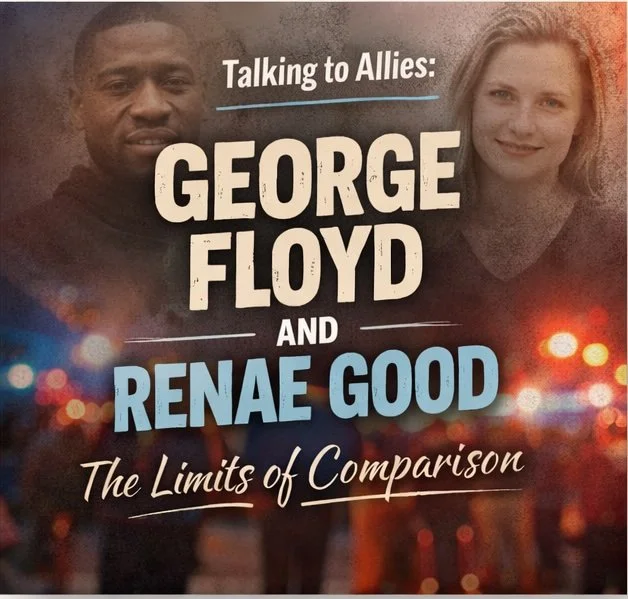
A few days ago, I was in conversation with one of my allies about the killing of Renee Nicole Good. They said the incident was similar to the murder of George Floyd. In the moment, I responded instinctively: “Yes—we’ve been trying to tell y’all. They don’t care. They have the authority to kill us and rarely be held accountable.”
And while that statement holds truth about state violence, I left the conversation feeling deeply uneasy. Because it’s not the same, and I can’t ignore that.
First, let me be clear: I am deeply saddened and disturbed by the death of Renee Nicole Good. Any loss of life at the hands of law enforcement or federal agents is tragic. I stand with the immigrant community, and I will continue to fight against state violence, abuse of power, and the systems that dehumanize people.
But comparison matters.
George Floyd’s murder did not occur in a vacuum. It happened within a centuries-long history of anti-Black violence in this country—rooted in slavery, enforced through Jim Crow, and carried forward through modern policing and mass incarceration. Black people have been criminalized simply for existing, surveilled in everyday spaces, and killed without justification. That historical weight is not incidental; it is central.
Renee Good’s killing occurred during a federal immigration enforcement operation. While deeply troubling and deserving of accountability, it emerges from a different system, one shaped by immigration policy, xenophobia, and federal authority. These harms are real. The fear and trauma they produce are real. But the conditions that produced them are not the same.
When allies rush to make everything “the same,” it may come from a desire to show solidarity, but it can unintentionally erase the specific histories that shape each form of violence. It flattens context. It blurs responsibility. And it leaves many of us feeling unseen, even in moments of shared grief.
This is not about ranking pain or dividing movements.
It is about telling the truth with care.
We can grieve Renee Good.
We can stand with immigrant communities.
We can condemn state violence in all its forms.
And we can still say—honestly and compassionately—that anti-Black violence in America carries a distinct and brutal legacy that must not be diluted or rewritten for comfort.
Solidarity does not require sameness. Justice requires clarity.
I say this with compassion, because we are all human. But the conditions are not the same—and naming that truth is part of doing this work responsibly.
Mokah Jasmine Johnson
AADM Co-founder
