
Bring the Dream to the Streets on MLK Jr. Day
I was not alive in 1963, but I live with the consequences of that moment every day.
When Dr. Martin Luther King Jr. declared “I have a dream,” he was not offering poetry for applause or words to be recycled once a year. He was naming a moral crisis and calling everyday people into responsibility. That speech was never meant to be frozen in time. It was meant to be carried.
Athens Anti Discrimination Movement is a reader-supported publication. To receive new posts and support my work, consider becoming a free or paid subscriber.
And today, the dream is no longer just a vision spoken from a podium — it is a question placed in our hands.
Yes, We’ve Made Progress — And No, That’s Not the Whole Story
I often hear people say, “Things are better now.” In some ways, they are. We see Black excellence in spaces that were once locked tight. We see success, creativity, leadership, and innovation. Those wins matter. They should be acknowledged.
But progress does not cancel history.
Doing better does not mean the damage has been repaired. It does not mean the pain has been addressed. It does not mean the systems that created inequality have been transformed.
You cannot measure justice solely by who survived.
The Past Is Not Gone — It’s Built Into the Present
The conditions many communities are still navigating today did not happen by accident. They are the result of intentional choices: who was protected, who was policed, who was invested in, and who was extracted from.
When we ignore that truth, we shift the burden from systems to individuals. We praise people for “overcoming” while refusing to examine what they were forced to overcome in the first place.
That is not healing. That is avoidance.
Critical thinking asks us to sit with discomfort long enough to tell the truth — not to assign guilt, but to take responsibility for what still needs to change.
Success Stories Don’t Erase Collective Wounds
Representation matters, but representation alone is not liberation.
A few doors opening does not mean the house is accessible. A handful of success stories does not negate generational loss, trauma, or grief. It does not erase stolen wealth, shortened lifespans, or communities destabilized by policy, neglect, and violence.
We can celebrate achievement and acknowledge injustice. Those truths are not enemies they are partners.
The Dream Was a Call to Action, Not a Conclusion
The dream was never about comfort. It was about courage.
It asked people to imagine a society rooted in dignity — and then do the hard work of building it. That work looks different today, but it is no less urgent. It shows up in housing, healthcare, education, environmental justice, and who gets to feel safe in public spaces.
The dream did not expire. It evolved.
And now, it lives in what we choose to confront, what we choose to protect, and how we choose to show up for one another.
Community Is Where the Dream Becomes Real
Justice is not built in isolation. It is practiced in community — in shared spaces where history is honored, culture is celebrated, and relationships are strengthened.
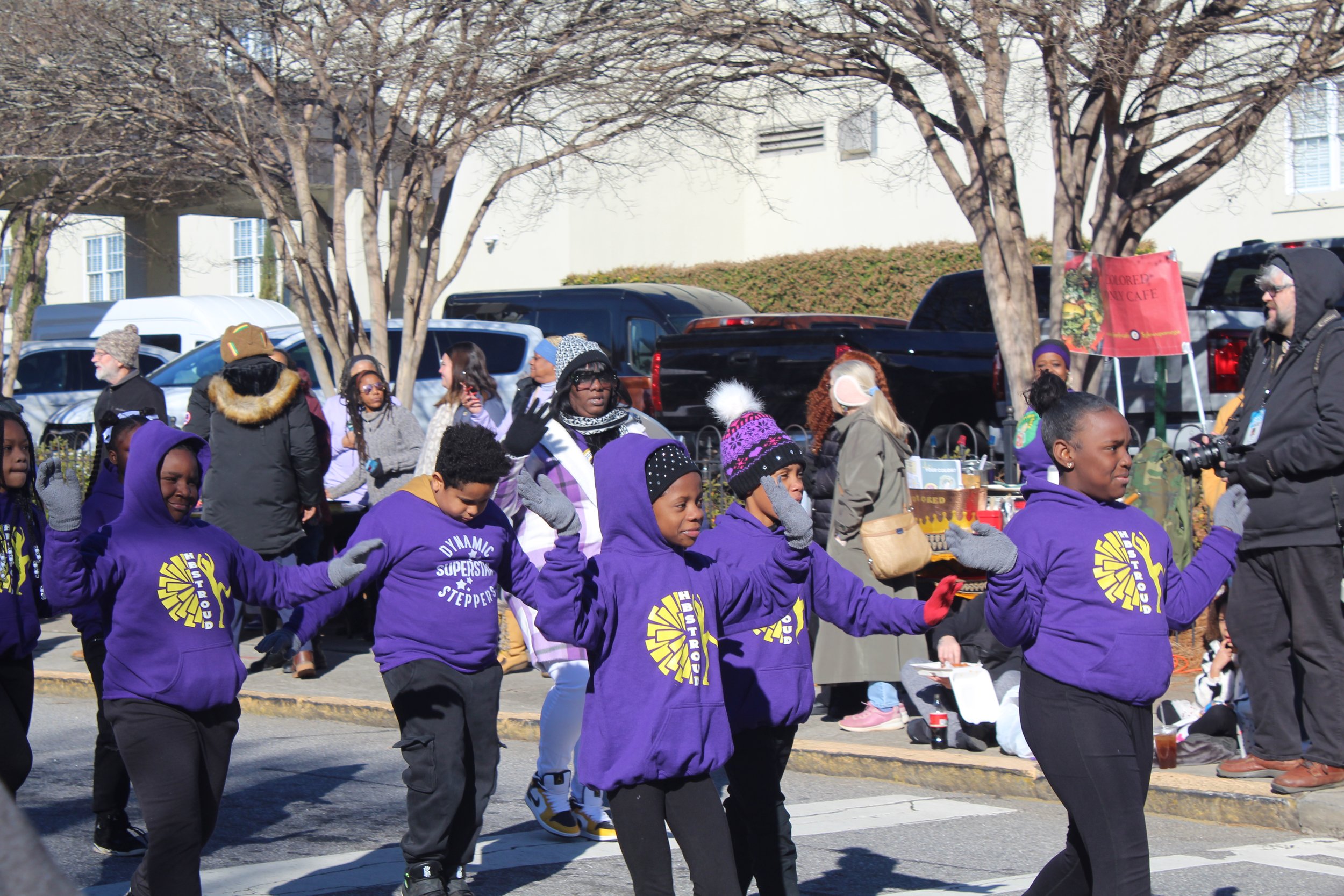
That is why gatherings like the Athens MLK Parade and Music Fest, held in Downtown Athens, Georgia, matter.
These moments remind us that the dream is not just something we quote — it is something we live. When we come together across generations, backgrounds, and beliefs, we affirm that our future is collective.
Come for the music, the joy, and the culture. Stay for the connection, the reflection, and the reminder that progress requires participation. The dream didn’t end with a speech. It changed hands.
And what we do with it now, that part is on us.
Mokah Jasmine Johnson, “Mokah Speaks”
AADM Executive Director and Co-founder
